


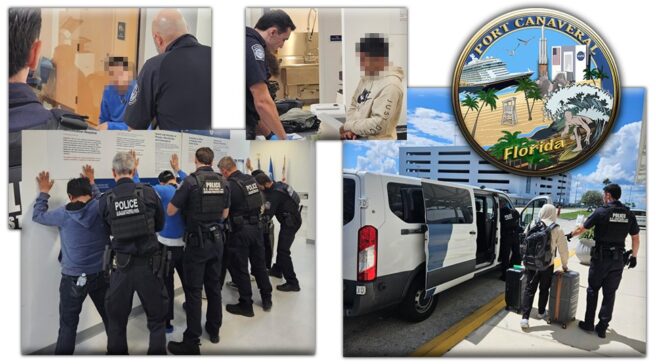
The Florida Director of Field Operations (DFO Florida) for U.S. Customs and Border Protection (CBP) in Port Canaveral has continued a series of deportations involving cruise ship crew members, this time following a targeted Child Sexually Exploitative Material (CSEM) “enforcement operation.” CSEM is typically called Child Sexual Abuse Material (“CSAM”). DFO Florida recently announced that an undisclosed number of crew members were allegedly “tied to multiple National Center for Missing and Exploited Children cyber-tips.” It claims that each crewmember “was linked to the possession, exchange, or purchase of CSEM.”
The popular Crew Center website claims that four crewmembers were apprehended and deported.
DFO Florida alleges that it interviewed the ship employees and also searched their cabins, “and the story ended the only way it could… the offenders were processed and returned to their country of origin.” Of course, this is not remotely the only way this could have been handled. Formerly, CBP arrested and prosecuted crew members for CSAM. It was not until earlier this summer that CBP began routinely deporting crew members instead. In the process, CBP could bypass establishing probable cause and due process.
This story is similar to the many dozens of other crew members who have been deported over the last six months. CBP has revoked crew members’ ten-year C1/D seaman visas based on allegations that they viewed child pornography while on the cruise ships. Based on my review of these type of incidents, nearly 200 crew members have been accused of possessing CSAM in the past 24 months. Around 20 were arrested and prosecuted, mostly over 6 months ago, with around 170 deported.
The stories of the deported crew members are all the same. CBP officers confront the employees and tell them that they allegedly viewed child pornography on their computers or phones. The crew members typically deny the accusations but eventually sign an acknowledgement after being threatened with long jail sentences. CBP personnel refuse to permit the crew members the right to speak with an attorney or a representative of the embassy. CBP does not permit them to review the evidence which allegedly incriminates them or otherwise confront their accusers.
DFO Florida did not disclose the nationalities of the crew involved, the name of the cruise ship, or when exactly the ship employees were removed from the cruise ship.
We have reported several times about the substantial amount of child pornography that exists on cruise ship. We have also mentioned the fact that our federal government has decided to no longer prosecute foreign nationals for CSAM but to simply deport them, ostensibly to their home countries, where they will escape all criminal responsibility for their alleged crimes.
Just as importantly, CBP continues to refuse to release information to the public, such as the cruise line and cruise ship, where these alleged crimes occurred. This is clearly in violation of the spirit of the Cruise Vessel Security and Safety Act which was designed to educate the public about the danger of sexual crimes on cruise ships.
Have a comment or question? Please leave one below or join the discussion on our Facebook page.
Photo credit: DFO Florida