



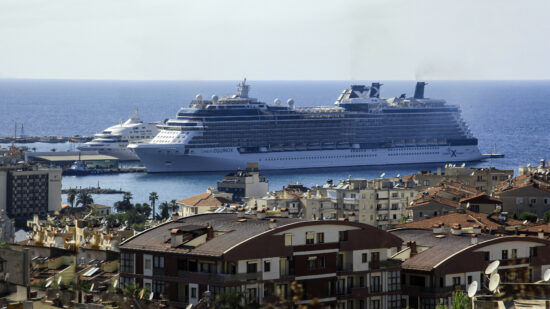
An LGBTQ+ chartered cruise has been denied entry into two countries in the Middle East in less than a week. The cruise ship, Virgin Voyages’ Scarlet Lady, is being chartered by Atlantis Events and was originally scheduled to have two stops in Turkey, first in Kuşadası on July 7 and then Istanbul on July 8 and 9.
Turkish officials blocked the cruise from its planned port calls in July, citing “moral values.” The governor’s office in Turkey’s western Aydın province released a statement that the news of the cruise coming “caused great discomfort in various segments of our society.”
The Scarlet Lady‘s itinerary was subsequently updated to stop in Alexandria, Egypt. The ship was then denied entry by Egyptian officials while it was less than 100 miles from Alexandria. Cruise tracking data shows the ship changing course in the early hours of July 9.
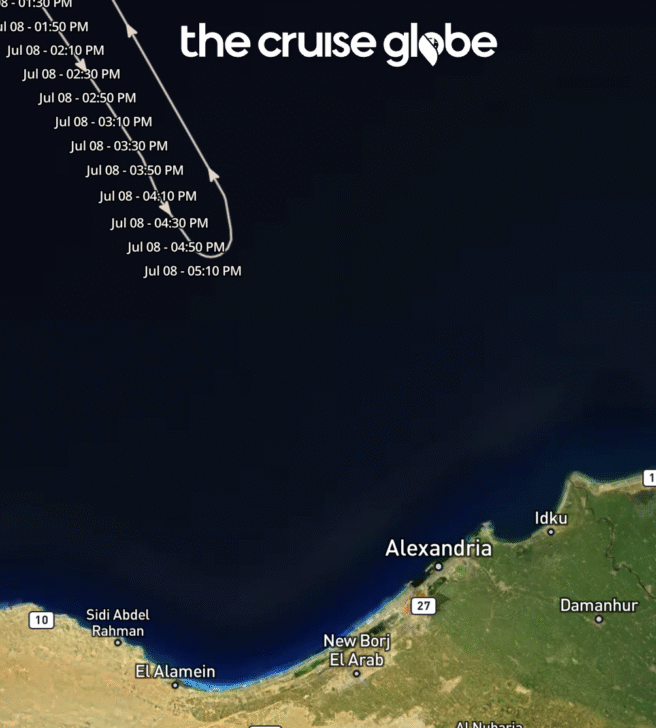
Following the second denial, the ship was rerouted again, with calls planned for Chania, Crete, and Montenegro.
No official explanation has been given by Egyptian officials as to why the ship denied permission to call in Alexandria. Rich Campbell, CEO of Atlantis Events, said in a letter to passengers, “We successfully sailed a similar itinerary last year without issue. So we were surprised by this unfortunate decision.”
Regarding the denied entry to Turkey, Campbell told CNN, “It’s pretty stunning, to be honest. I mean, and the reasoning behind it is that it’s a gay group.” He continued, “It’s very concerning to me when a country decides they can pick and choose which tourists are allowed in and which are not.”
Campbell founded Atlantis Events in the early 1990s. The company started by hosting all-gay resort vacations and expanded into full-ship cruise charters by the end of the decade. Atlantis Events does not own any cruise ships but instead charters them. Atlantis Events has worked with major cruise lines such as Royal Caribbean International, Virgin Voyages, and Celebrity Cruises.
The passengers aboard the Scarlet Lady will have little to no legal recourse for the canceled stops. Passengers may understandably be upset when a promised itinerary changes, but missed ports generally do not create a viable claim for emotional-distress damages. Furthermore, cruise ticket contracts typically give cruise lines broad discretion to cancel, substitute, or change ports of call. Lastly, any legal action against Turkey or Egypt would likely be futile. No matter how discriminatory the decisions were, foreign governments generally have broad authority to control access to their ports and territorial waters.
Have a comment or question? Leave one below or join the conversation on our Facebook page.