

Carnival Corporation withheld scrubber-discharge data from Alaska regulators for months, according to a report by Alaska Public Media and KHNS.
The dispute centers on Carnival owned ships operating in Alaska with open-loop scrubbers. The scrubbers use seawater to reduce sulfur emissions by washing contaminants out of exhaust gases and discharging the wash water back into the sea. Open-loop scrubbers have been criticized for converting air pollution to water pollution.
Alaska officials say they repeatedly asked Carnival for discharge records and, in some cases, direct samples. Carnival refused.
One of the clearest examples involved the Discovery Princess. During a September 2025 inspection in Ketchikan, Alaska Department of Environmental Conservation inspector Annie Goodenough reportedly saw a sheen on the water and later “sooty, black globs” coming from the ship’s scrubber discharge point. She twice asked to review the ship’s scrubber data and was denied both times.
Alaska Public Media later reported that the vessel’s annual EPA report showed scrubber-discharge exceedances on those same dates. That is not a minor paperwork dispute. It is a regulator seeing suspicious discharge, asking for the data behind it, and being turned away.
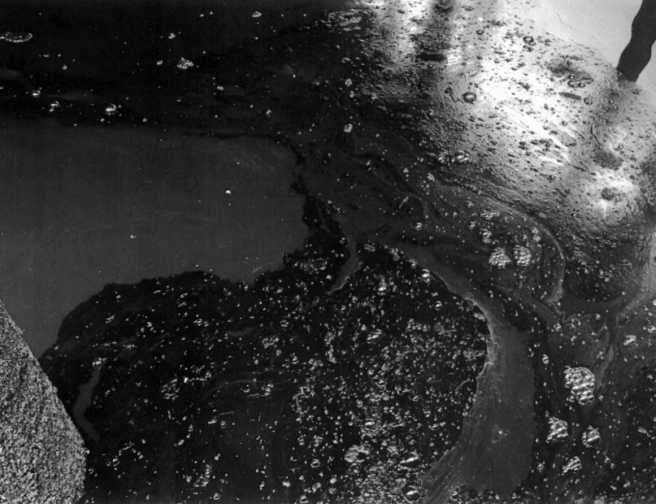
Cruise Law News previously wrote about scrubber discharge pollution in Ketchikan, Alaska in 2018 when a Carnival owned ship discharged a black sludge in the local port.
Alaska Public Media reported that more than a dozen inspection reports showed at least four other Carnival-operated ships similarly declined requests for scrubber information. Carnival’s significance in Alaska makes that harder to dismiss.
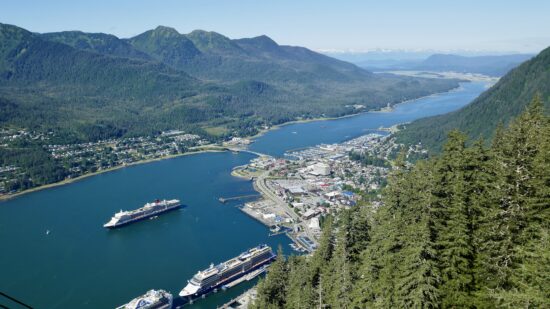
The company controls more than 40% of the state’s large cruise ship fleet through its five brands — Carnival Cruise Line, Princess Cruises, Holland America Line, Seabourn, and Cunard. Carnival’s ships are reportedly the only ones in Alaska using open-loop scrubbers. Between 2023 and 2024, 17 Carnival ships operating in Alaska logged more than 700 violations of scrubber-discharge limits, according to the same report.
Carnival has tried to frame the issue as a legal and procedural disagreement. The company told Alaska Public the requests were “unusual and unexpected” and argued that the state lacked authority to demand the data in the way inspectors sought it. Later, Carnival said it remained committed to transparency but wanted any testing to follow established scientific protocols.
Alaska DEC Commissioner Randy Bates was not buying that explanation, saying Carnival was “misreading” state law and drawing a “fictional line” around the agency’s authority. For a company with Carnival’s environmental record, withholding pollution data while hiding behind technical arguments looks less like transparency than straight obstruction.
In 2016, the U.S. Department of Justice announced that Princess Cruise Lines agreed to plead guilty to seven felony charges tied to deliberate pollution and efforts to cover it up, paying a $40 million criminal penalty — the largest-ever criminal penalty involving deliberate vessel pollution.
In 2019, the DOJ said Princess and its parent company, Carnival, paid another $20 million after admitting to environmental probation violations. Cruise Law News has covered Carnival’s long record of environmental violations before, including when a federal judge threatened to imprison company executives over continued pollution offenses.
CLIA deserves scrutiny here too. Alaska Public Media reported that the cruise industry trade group helped design a 2024 Puget Sound scrubber study that concluded there was “minimal potential for ecological risk,” even though Washington’s Department of Ecology did not fully agree with that conclusion.
That is familiar industry behavior: insist scrubber discharges are safe, resist close oversight, and then balk when regulators want the underlying data. Alaska regulators still do not have all the information they sought, which leaves the state trying to police a repeat polluter without full access to what Carnival’s ships are dumping into its waters.